Contents
- Why I went: breaking out of a life on repeat
- Panic at Kyoto Station: the price of traveling blind
- Kanazawa: a slow-paced old city spared by the war
- LINNAS Kanazawa: not a hotel, but a home
- The reality of cooking in Japan: cheap vegetables, expensive rice
- Urban Retreat: eight days and seven nights of inner dialogue
- Morning walks, meditation and yoga
- Matcha-Fulness Workshop
- Calligraphy Art Workshop
- Art Reflection
- Omamori Drawing
- Zen Meditation
- Farewell Dinner
- What I learned firsthand about digital nomading
- Lesson 1: being a digital nomad isn't “traveling while working”
- Lesson 2: I fell in love with co-living
- Lesson 3: travel without shopping
- Real digital nomads: how do they do it?
- Case 1: Yuki, a Japanese calligraphy artist
- Case 2: Amanda and Andre, a Taiwanese couple in rental property management
- Case 3: Severin, a Swiss employee
- Three abilities every digital nomad needs
- 1. Speaking English
- 2. Living minimally, and being able to accept uncertainty
- 3. Letting go of society's default path
- Beyond the rose-tinted bubble: loneliness and social fatigue
- Closing: take back your choices
Why I went: breaking out of a life on repeat
Many people asked me why I suddenly decided to go to Kanazawa for this program.
I actually saw someone share it in my own book club community. At the time, I hadn't been to Japan for almost three years.
The last time was January 2023, when I took my dad on an independent trip to Tokyo. Let me repeat my advice: never take elderly parents on a do-it-yourself trip — it's terrifying!
Since then I'd often arranged travel insurance for clients and watched friends head off to Japan one after another, and I started getting itchy feet too.
More importantly, I realized my life had fallen into an extremely regular but unstimulating routine: wake up and meditate, do yoga, create, read, visit clients, record, edit, exercise, and spend weekends with family in the countryside.
All of that creative work was fun, but I felt something was missing.
I wanted to know what “traveling while working” actually felt like, and to shake up my unchanging routine. So I signed up.
Panic at Kyoto Station: the price of traveling blind
I did no research at all before I left. I didn't know where Kanazawa was; I'd never even heard of it.
Kanazawa is in Japan's Hokuriku region. On a map, it's roughly up and to the left of Tokyo, or up and to the right of Osaka.
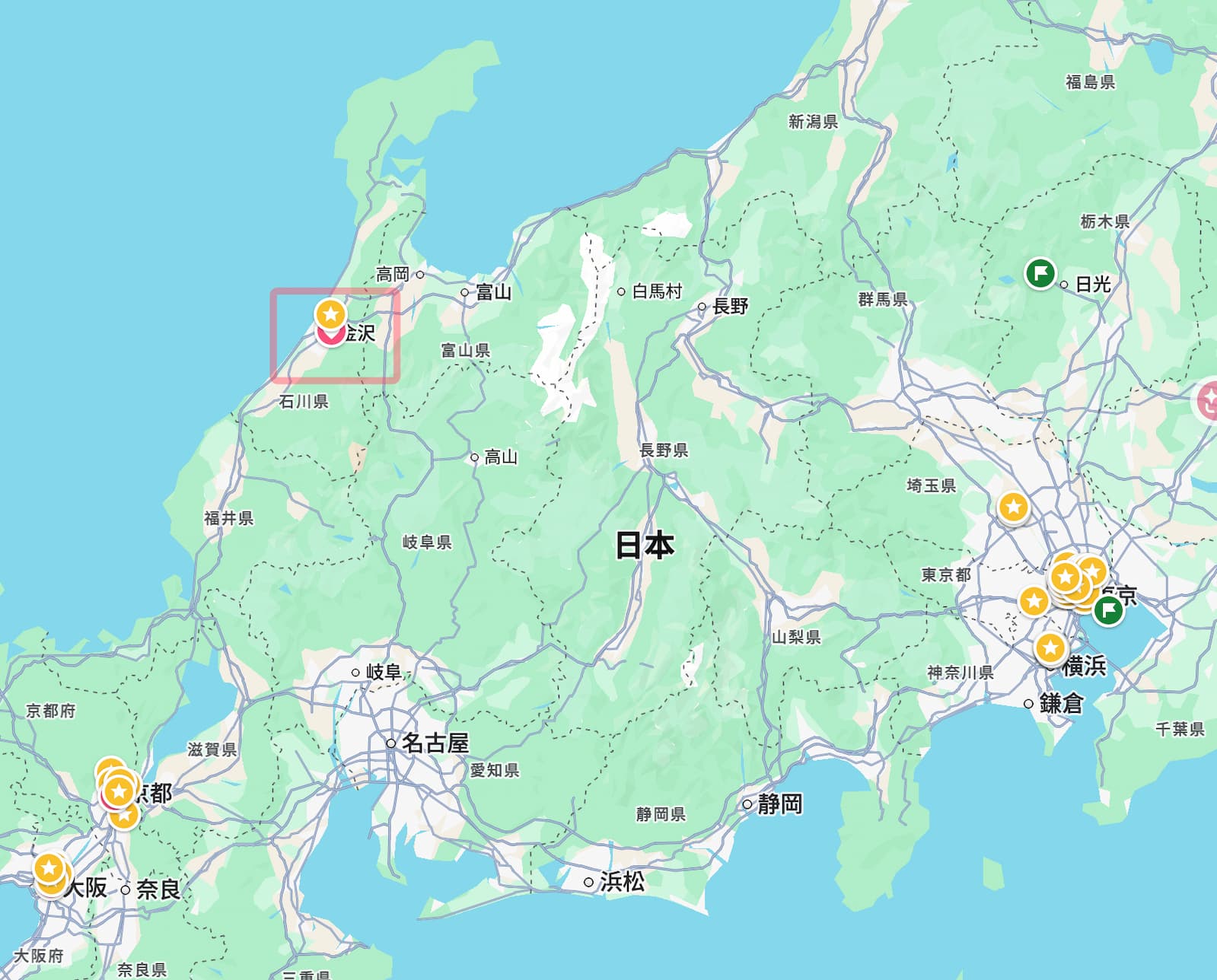
Whether you leave from Osaka or Tokyo, the train to Kanazawa takes about three to four hours. What I never expected was the trouble I'd run into on the way.
Changing trains at Kyoto Station, I was lost for more than two hours.
I hadn't bought a ticket and didn't know where to buy one, so I watched two trains to Kanazawa pull in and leave right in front of me. As soon as the station staff heard me speak English, they looked very nervous.
They even pulled out a small translation device, spoke Japanese into it and showed me the English, but communication still didn't go smoothly.
In the end, thanks to a Chinese-speaking station attendant, I finally got my ticket. It taught me that even with translation tools, basic language skills still matter a great deal at critical moments.
Video 👉 Kanazawa's first snow of the year
Kanazawa: a slow-paced old city spared by the war
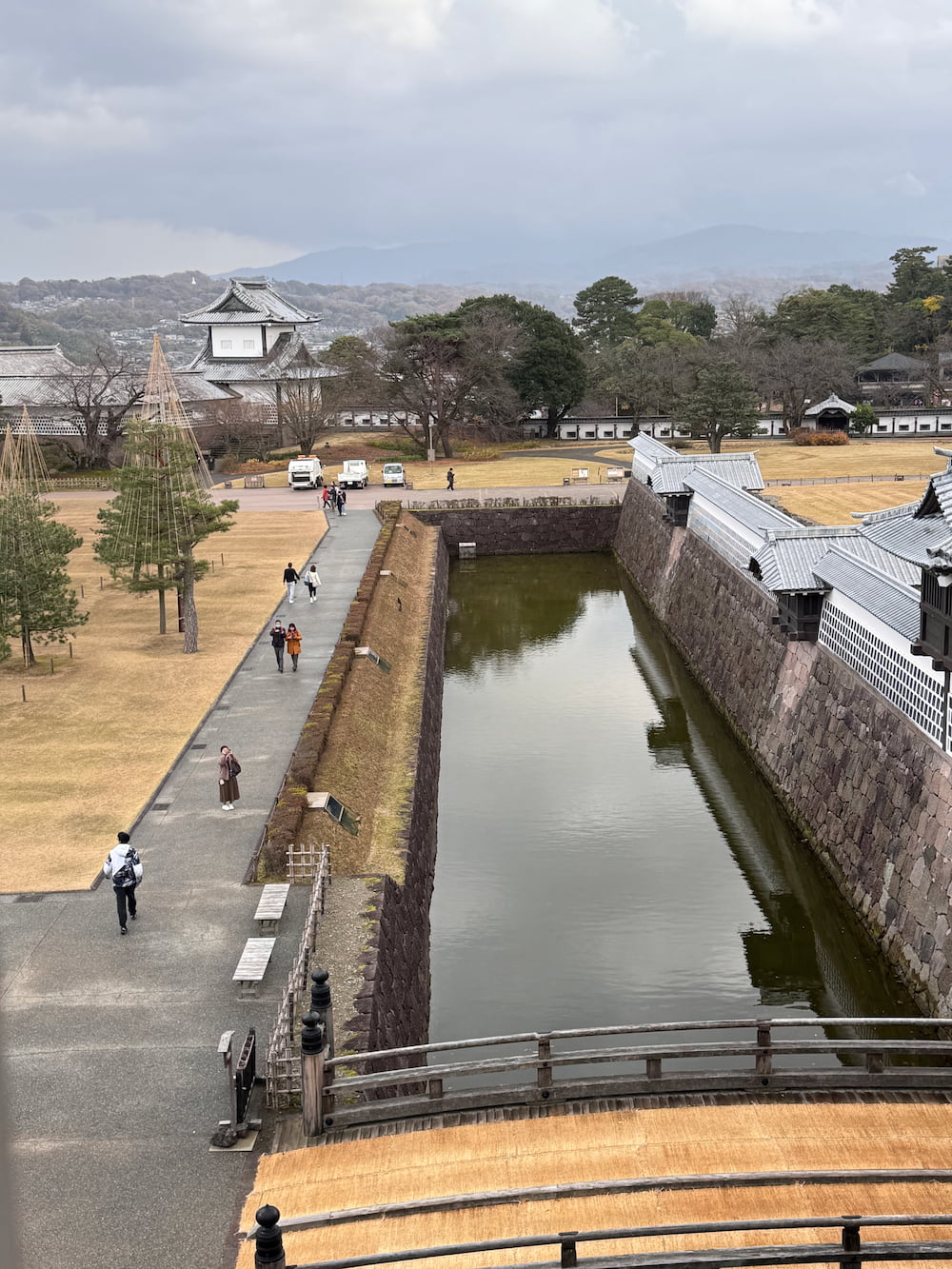
When I finally arrived, I fell in love with the city straight away.
If I compare it with a city in Taiwan, Kanazawa is a bit like Chiayi — lots of cultural activities, many historic sites, and a very slow pace of life.
Video 👉 Digital nomading in Kanazawa, day 2
Kanazawa escaped bombing in World War II, so much of its cultural heritage survives intact.
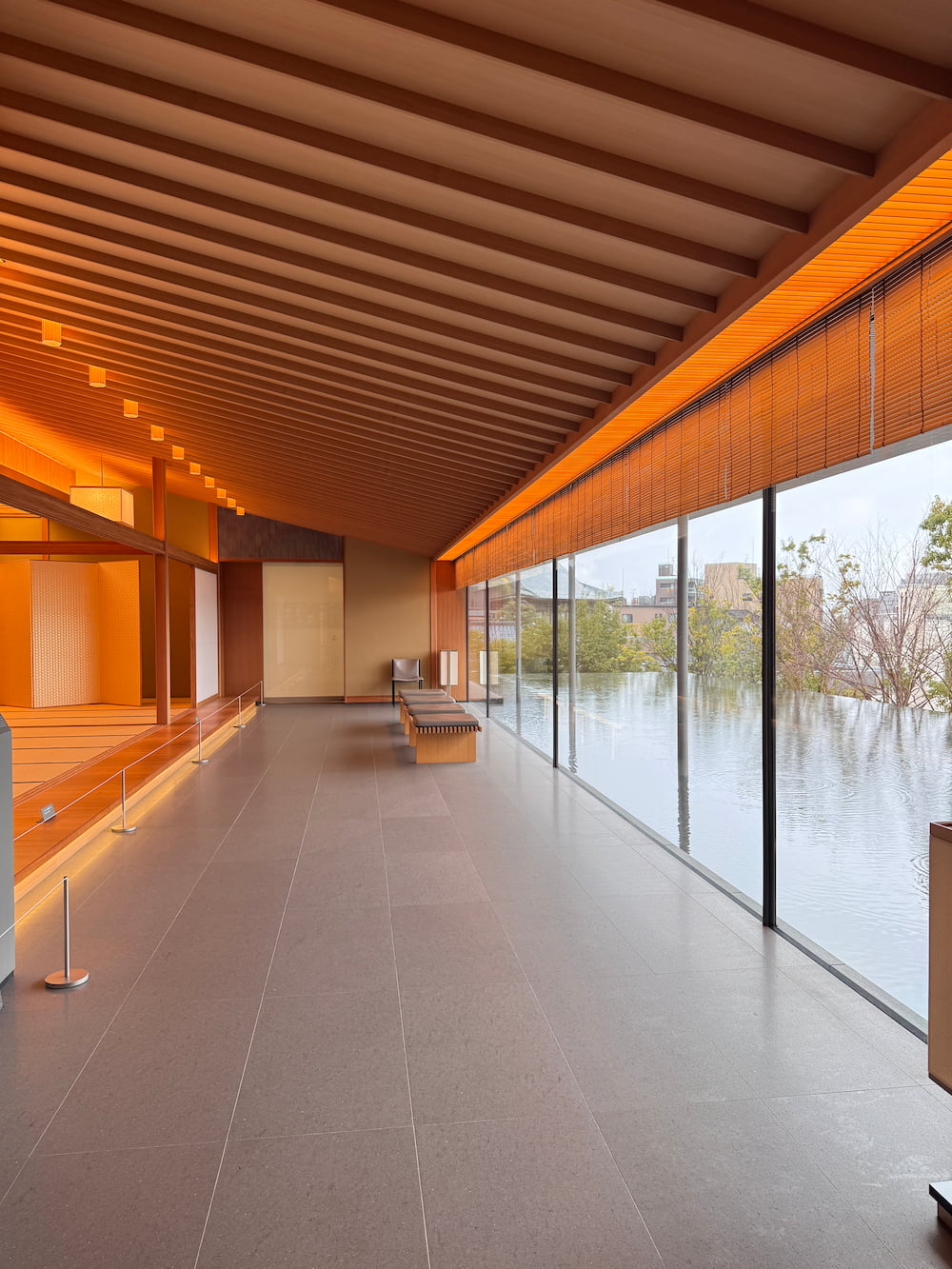
I loved walking around Kanazawa; there weren't many tourists. When I visited the Yoshiro and Yoshio Taniguchi Museum of Architecture, there were only three visitors there, including me.
If you don't like the crowds of Tokyo and Osaka, Kanazawa is the perfect place to relax.
Video 👉 The Taniguchi museum
A fun fact: Kanazawa is pronounced Kanazawa. I used to think its name was Ginza — one of my little blunders.
Video 👉 Digital nomading in Kanazawa, day 3
LINNAS Kanazawa: not a hotel, but a home
The base for the program was LINNAS Kanazawa, a hotel designed for co-living.
The founder loves travel and living together with others, and built the space for exactly that.
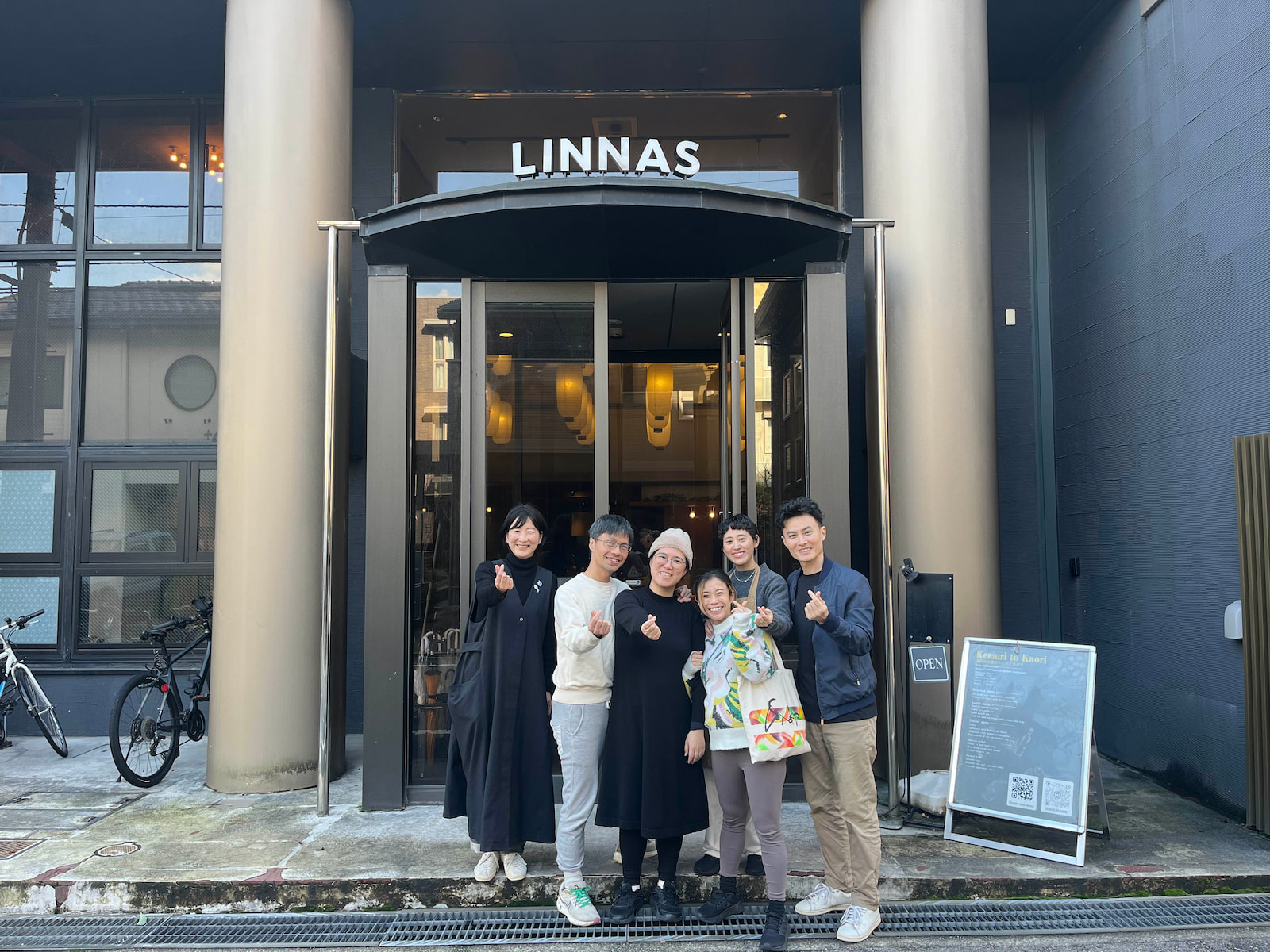
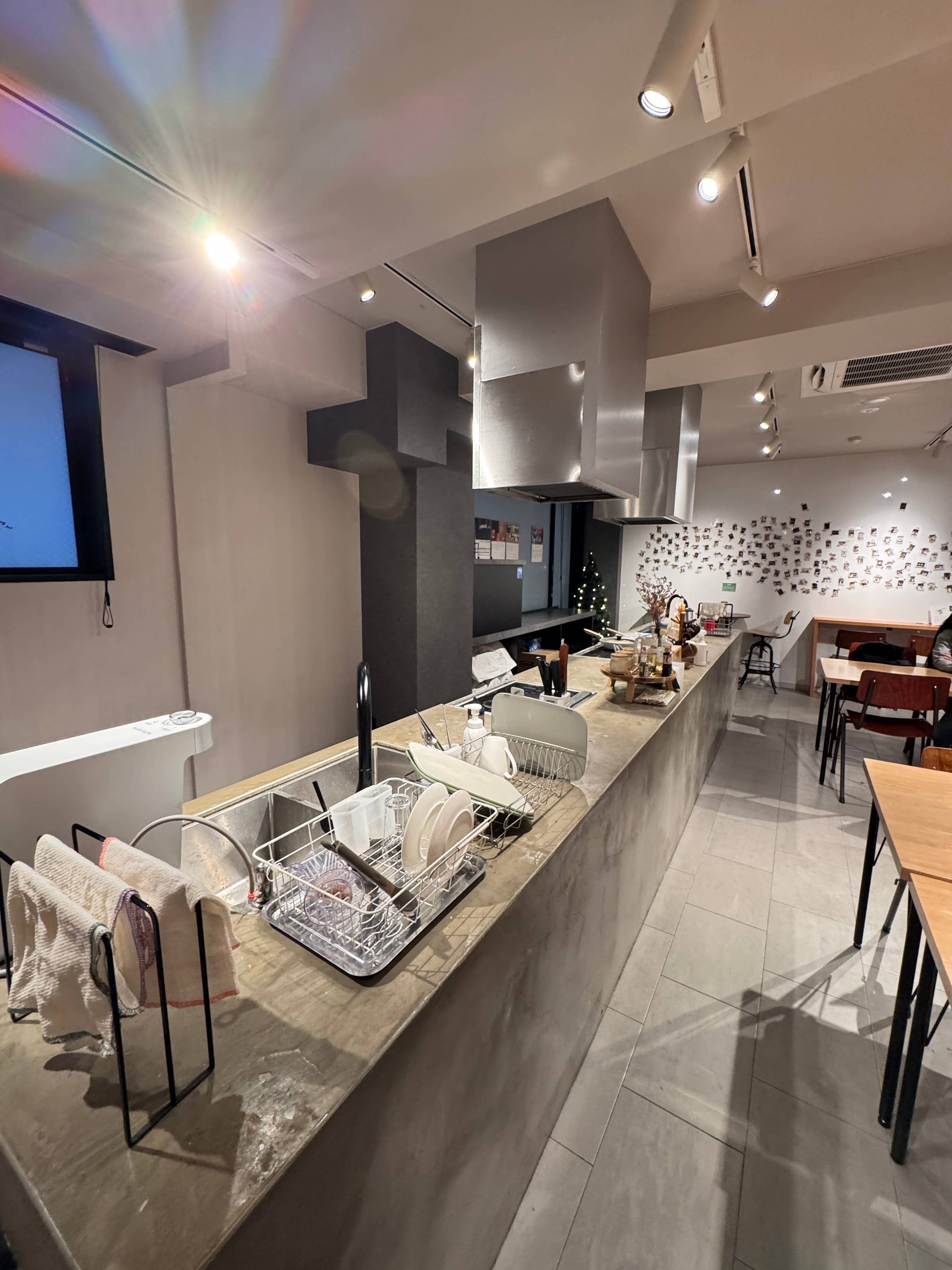
It has a huge professional kitchen, a gym, meeting rooms and a lounge.
I have to emphasize the kitchen: it's the reason I cooked six of my own meals during my seven nights there.
Video 👉 Kanazawa food special — mostly filmed in this kitchen
The reality of cooking in Japan: cheap vegetables, expensive rice
During my days in Kanazawa, I came to love grocery shopping.
Cabbage in Japan is amazingly cheap and delicious. What I cooked most was hot pot: wash the vegetables, slice the meat, toss it all in — easy and healthy.
The price of rice shocked me, though. 1.5 kg cost a little over 2,000 yen (about NT$400+), roughly two to three times the price in Taiwan.
So our group wised up and bought 150-gram microwavable rice packs instead, about NT$30–40 each.
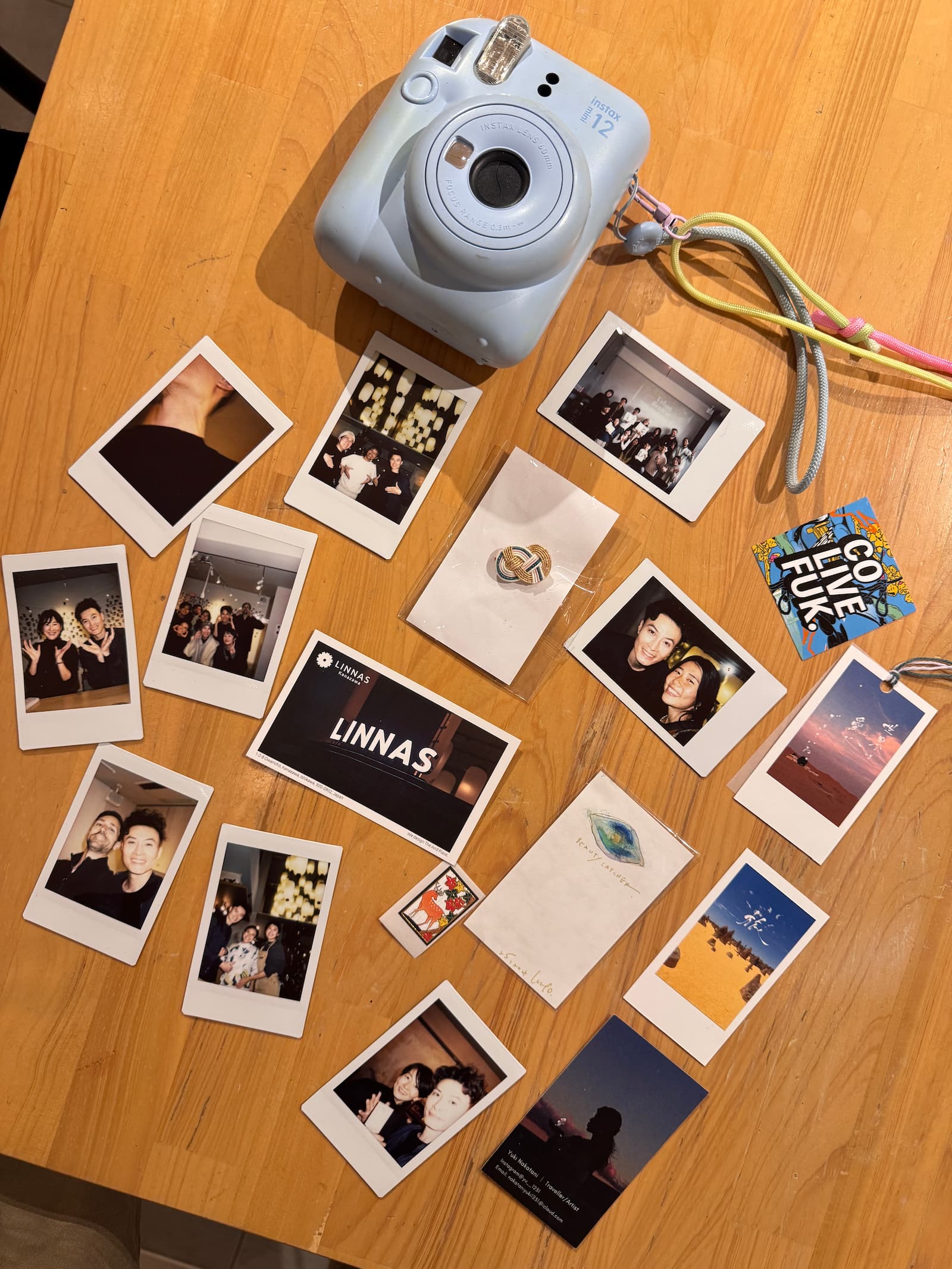
P.S. I stuck three instant photos on the kitchen wall. If you ever stay there, see if you can find mine.
Urban Retreat: eight days and seven nights of inner dialogue
The program is called “Urban Retreat”. As the name suggests, the idea is to retreat from busy city life to slow down in Kanazawa.
Eight days and seven nights, including accommodation, cost about 78,000 yen (about NT$16,000).
The program was packed, and everything was in English.
The group was very international: besides the three of us from Taiwan, there were people from Japan, Spain, Bulgaria and Switzerland.
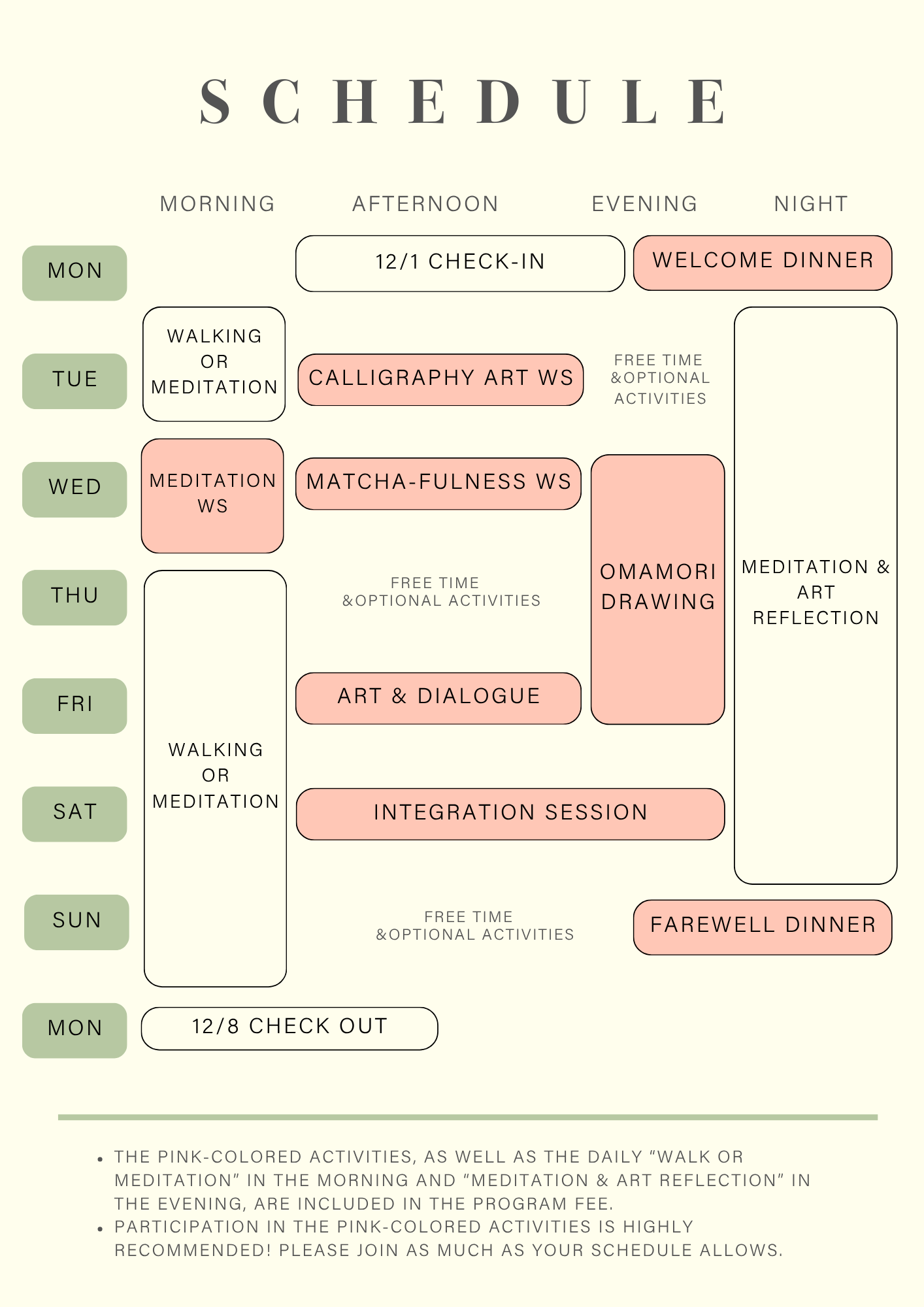
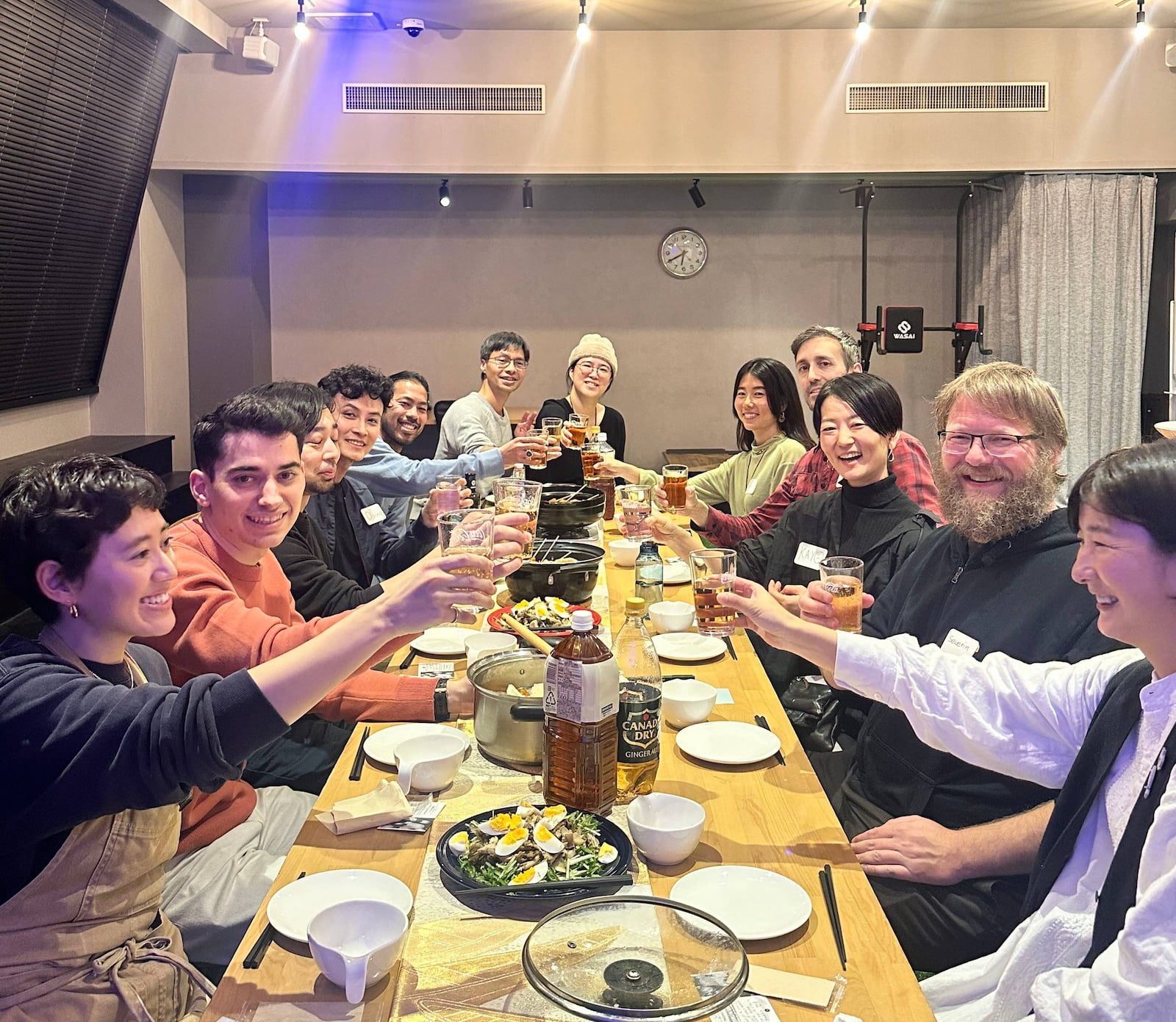
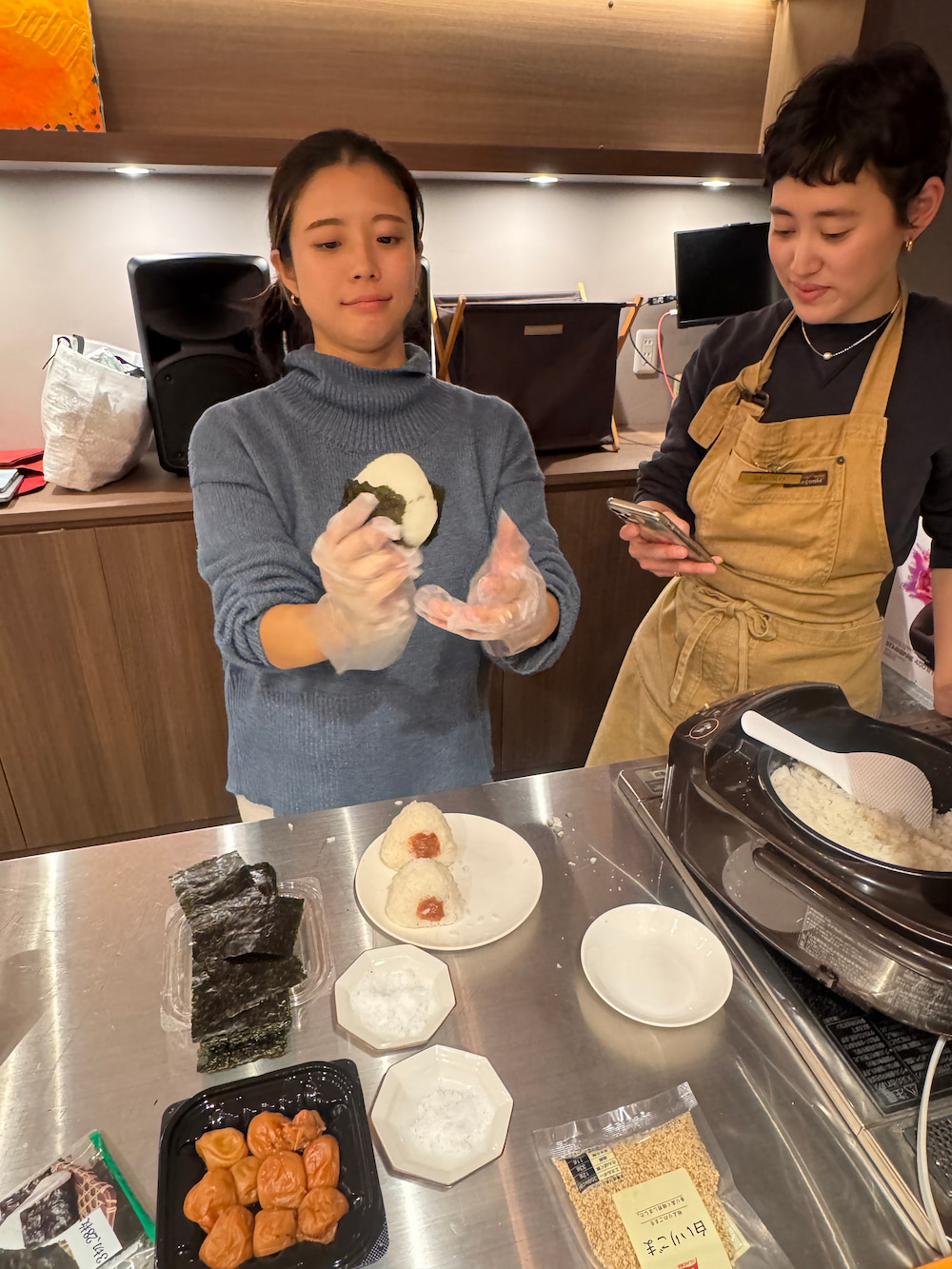
Our days included:
Morning walks, meditation and yoga
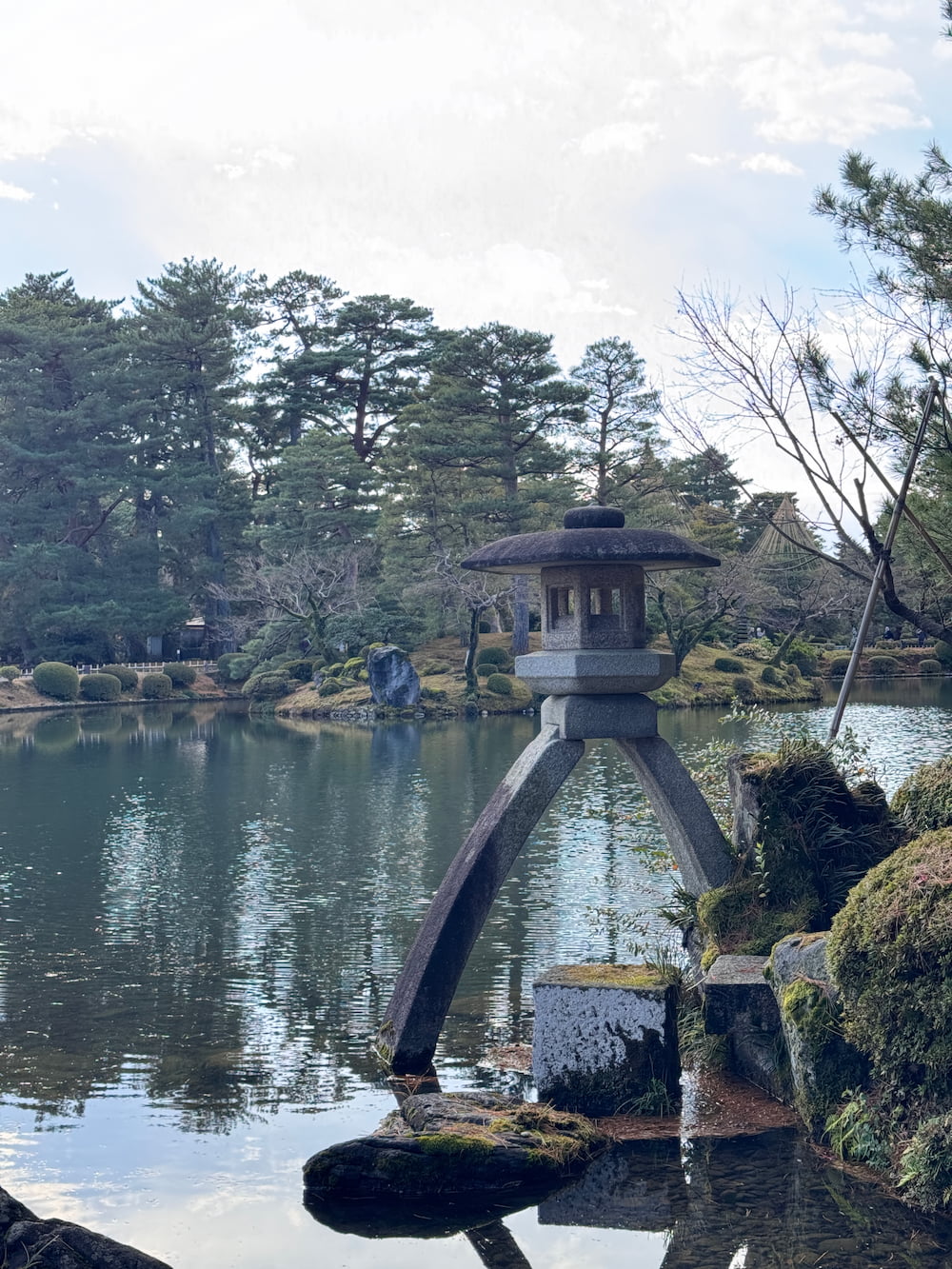
On the first day they took us for a walk in Kenroku-en, one of Japan's three great gardens. On the following mornings, a teacher led yoga and meditation.
Matcha-Fulness Workshop
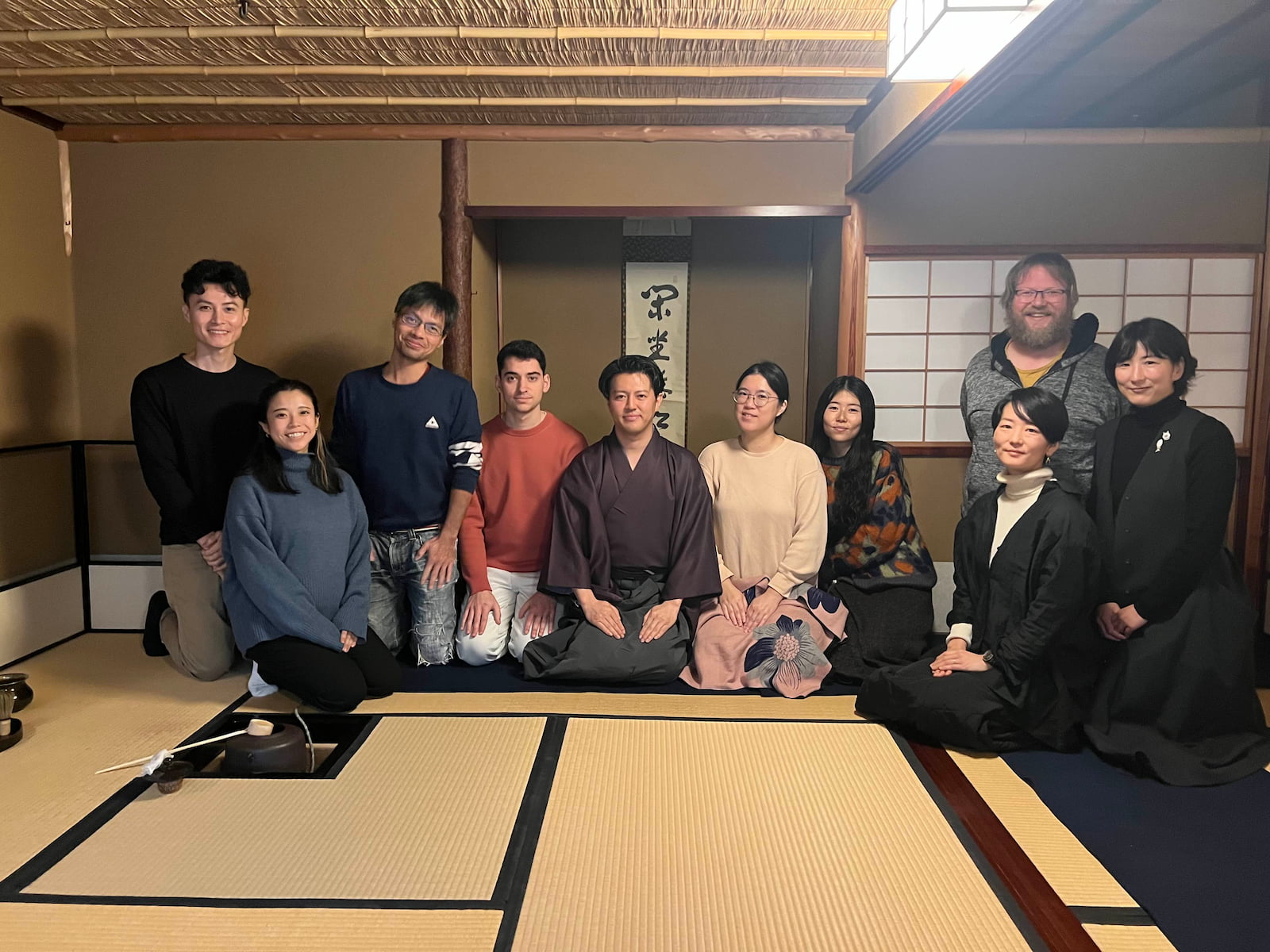
We went to a tea ceremony school to experience Japanese tea culture firsthand.
It was taught by the tenth-generation head of a tea ceremony family. Watching the master's practiced demonstration, I felt an inexplicable sense of being moved.
Video 👉 The tea ceremony
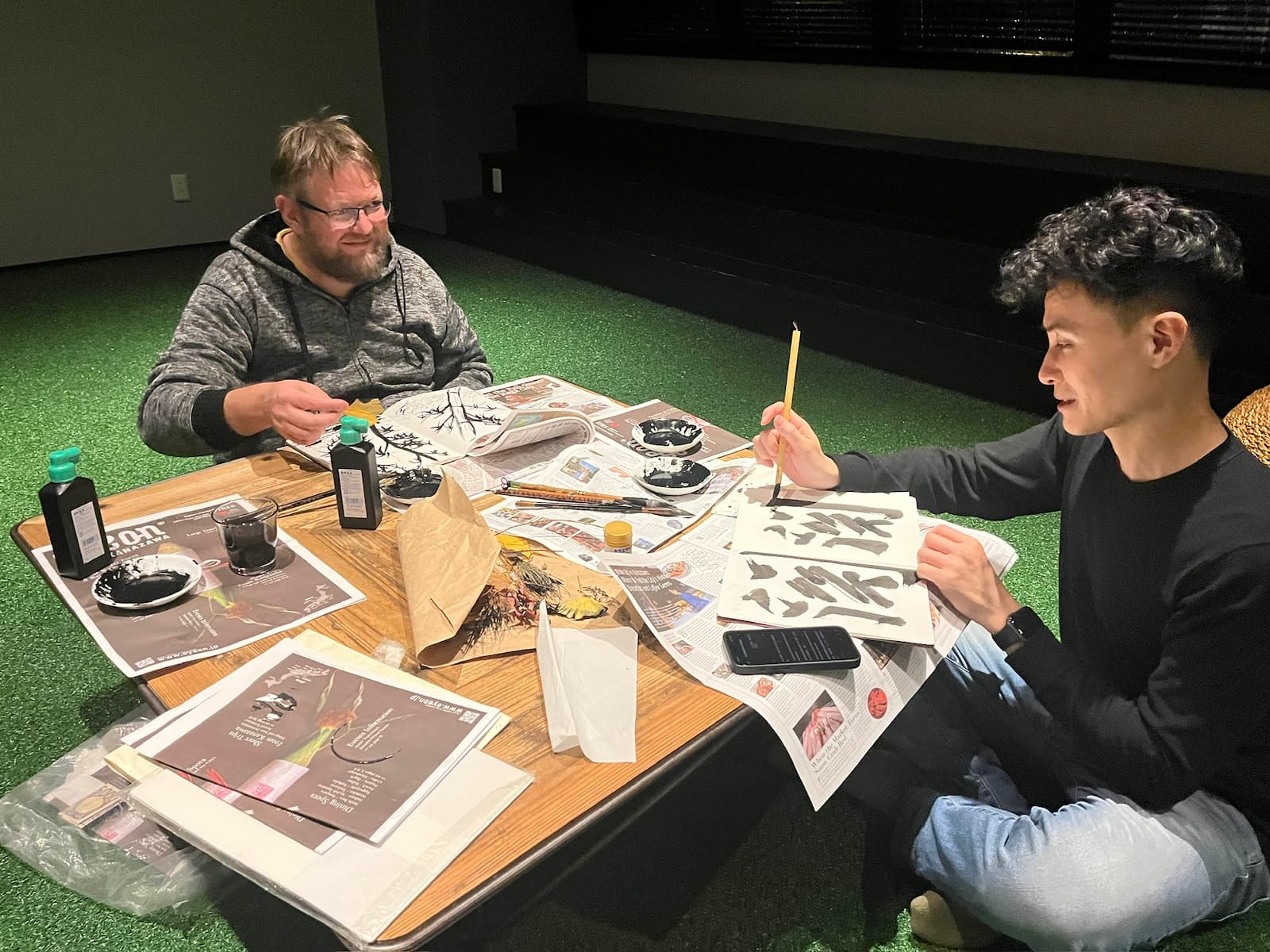
Calligraphy Art Workshop
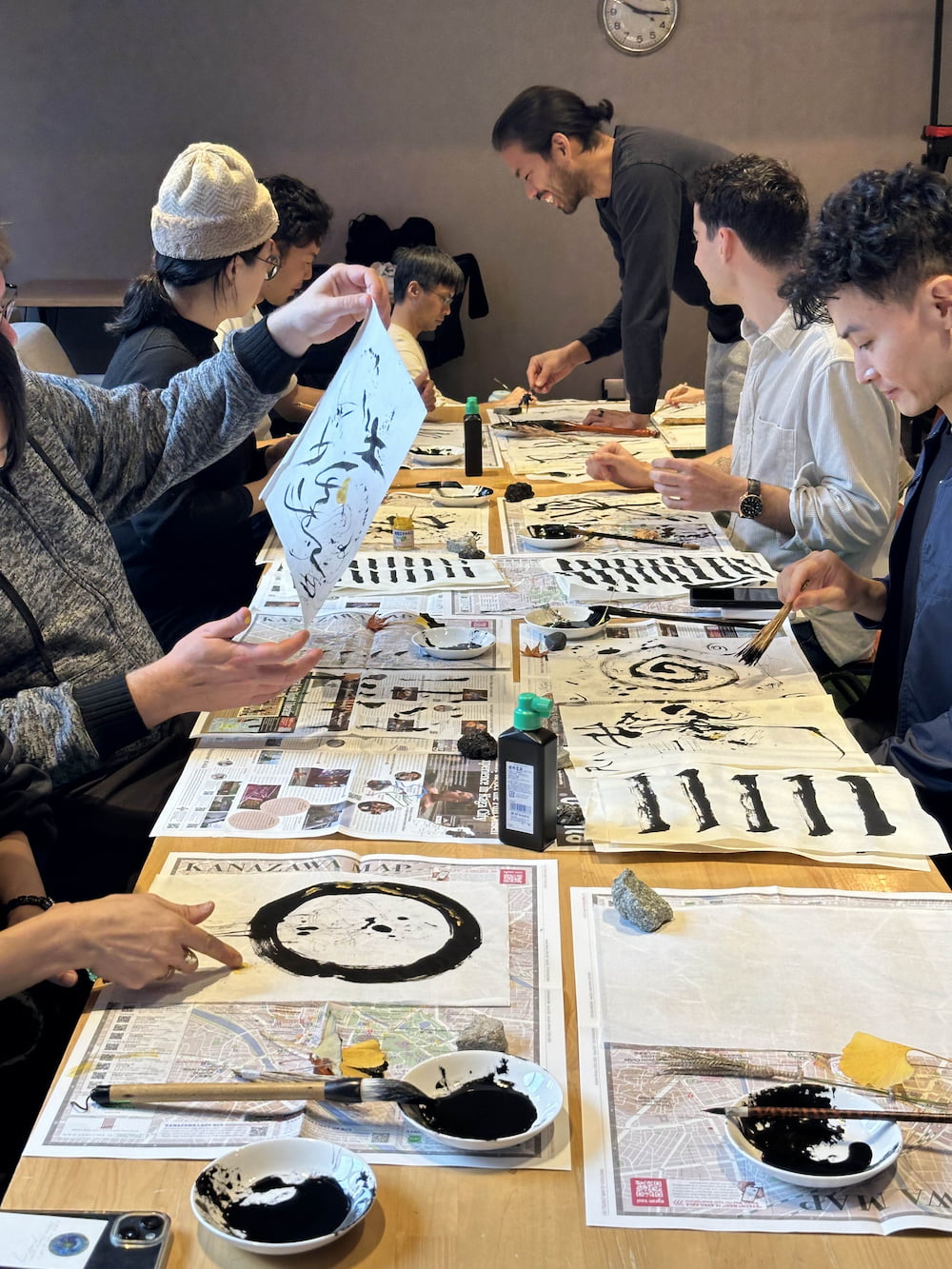
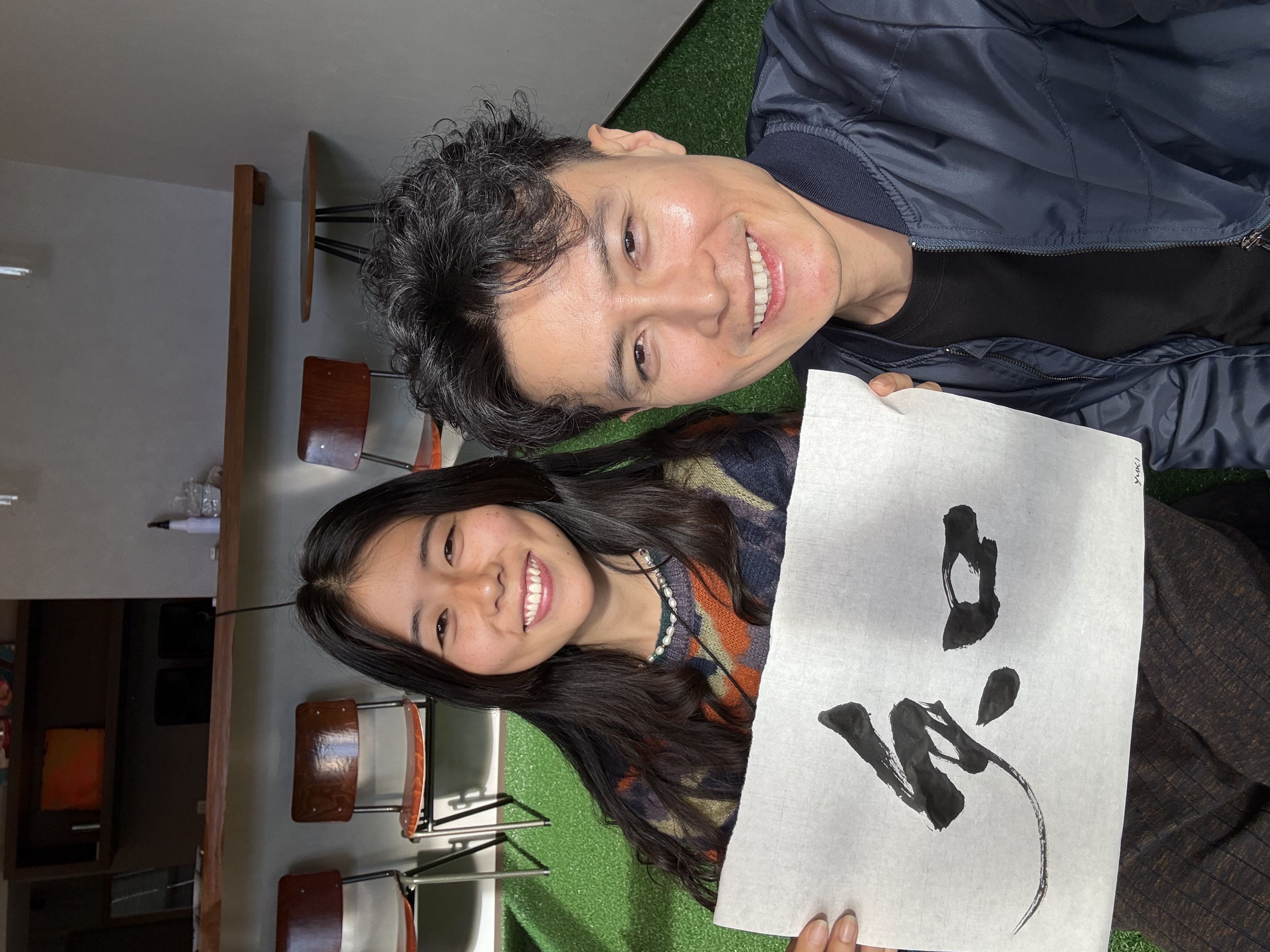
Yuki, a Japanese woman who has lived abroad for a long time, taught us.
We started with simple single strokes and ended with free expression; everyone had a great time.
Video 👉 Calligraphy special
Art Reflection
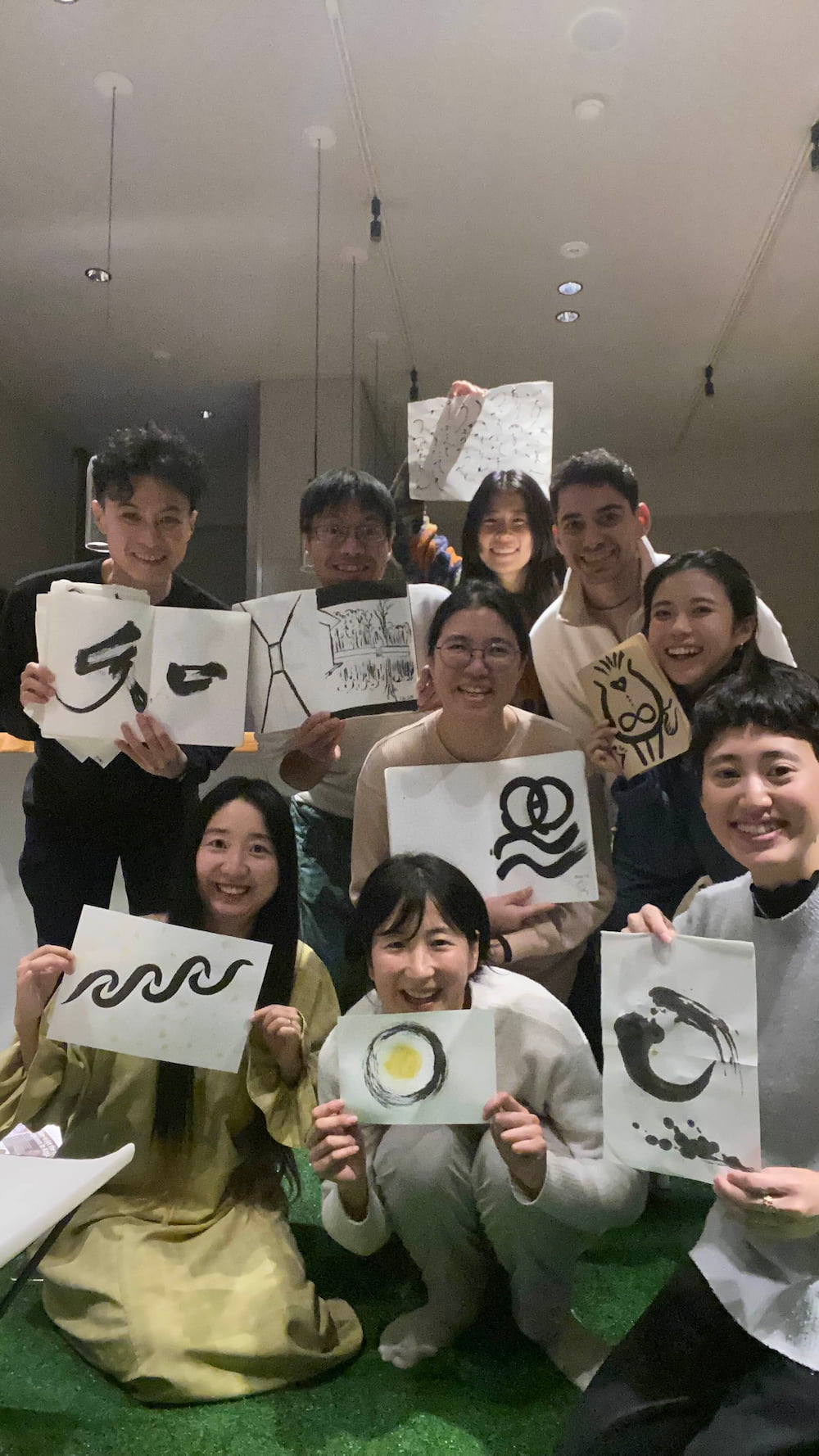
Every evening we gathered to write or paint with a brush to reflect on our mood that day, led by a Japanese man named Sou.
Afterwards we shared our work with each other.
It was fun: you could draw or write anything at all, as long as you could explain it.
At first I painted, but my paintings were so ugly they were painful to look at.
So I switched to writing characters, and found a sense of achievement.
I'd capture the strongest impression or feeling of the day in a single Chinese character.
I'd copy different styles of it and keep refining that one character.
I really enjoyed the process, because no one criticizes your writing.
All you have to do is
express how you feel right now, and how your day went.
Omamori Drawing
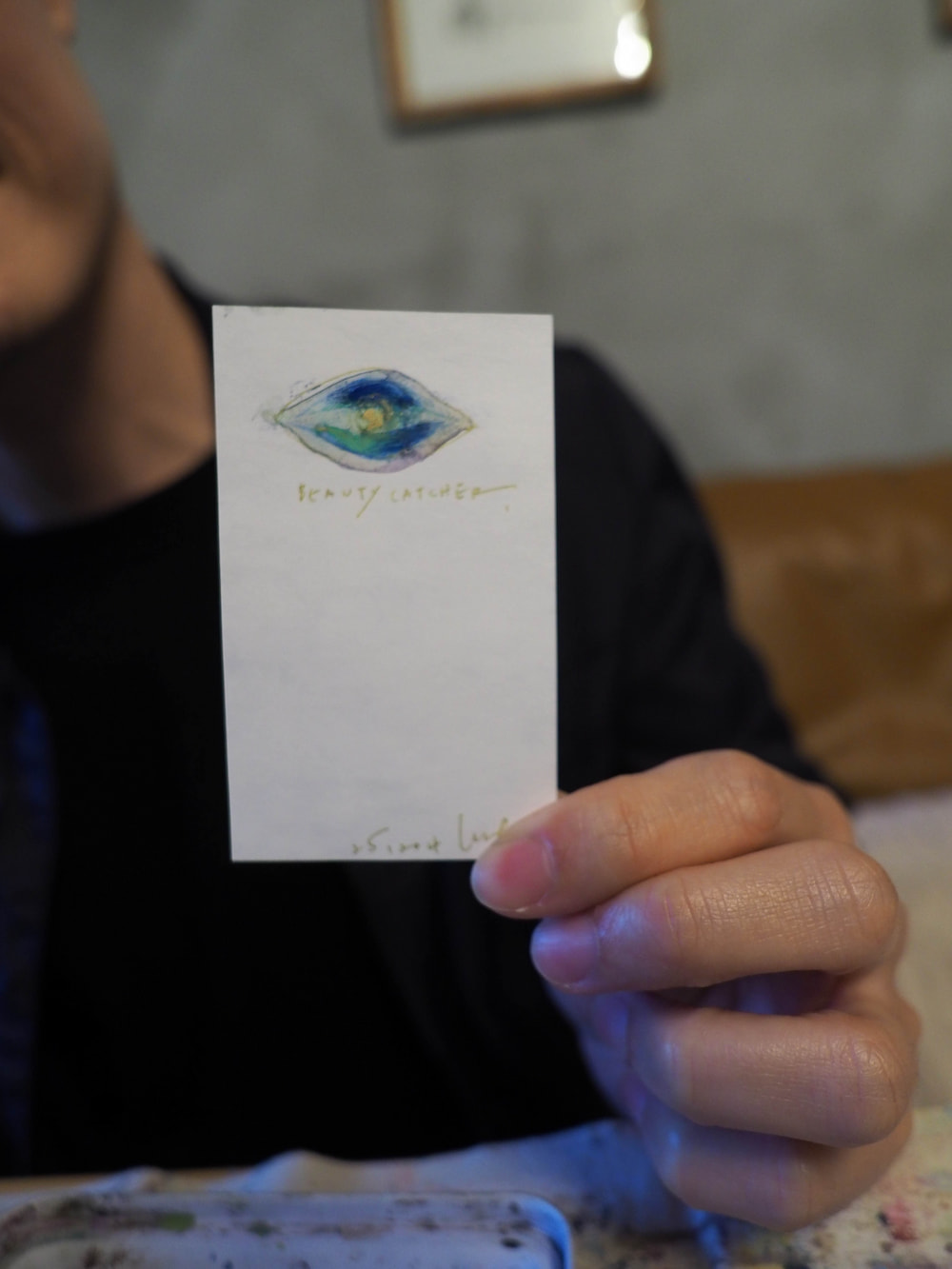
Through conversation, Japanese artist Kayo Nomura paints you your own watercolor omamori (protective charm).
Her painting connects with how you feel in that moment — a very special feeling.
Zen Meditation
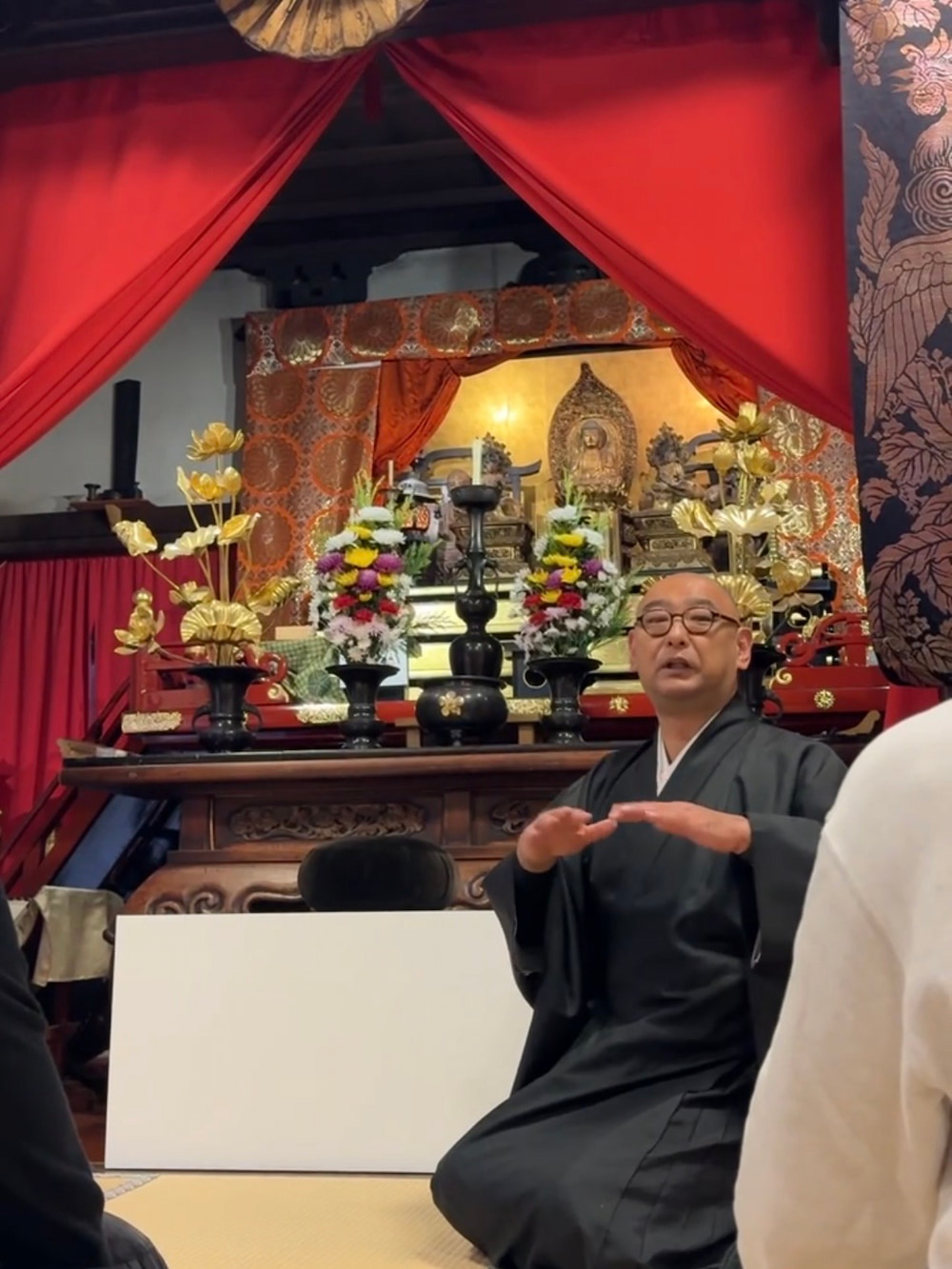
We went to a local temple for a meditation session led by the head priest.
He walked behind us carrying a bamboo stick.
He said, “If you get distracted, you'll get the stick.” (He was joking, of course.)
But you could still feel the tension — just like watching the young monk Ikkyu training in his temple.
Farewell Dinner
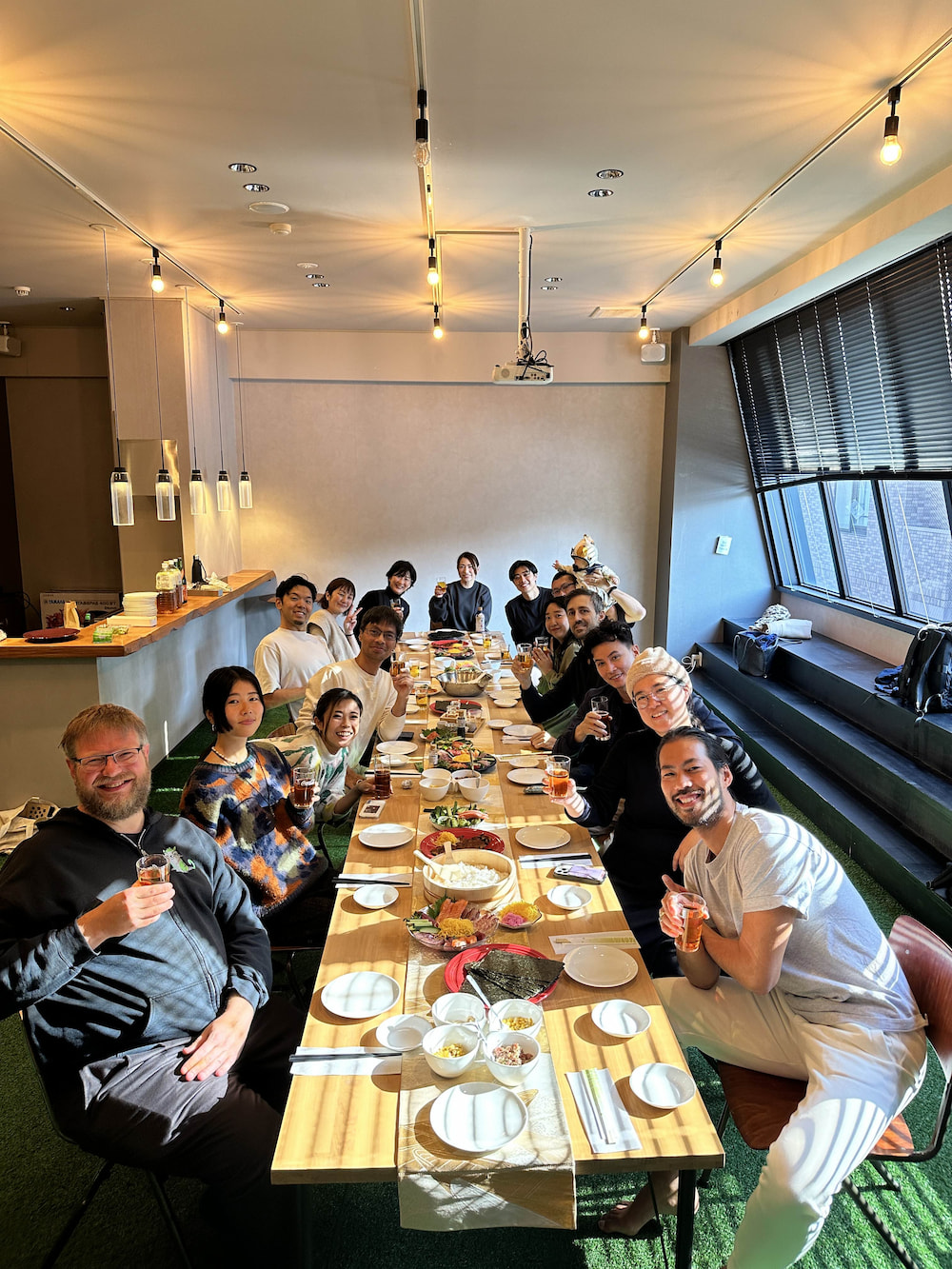
On the last day, we all made sushi together by hand and said our goodbyes.
What I learned firsthand about digital nomading
This trip shattered many of my fantasies about being a digital nomad.
Lesson 1: being a digital nomad isn't “traveling while working”
I found that when the schedule is full and the places are beautiful, you don't want to work at all. In Kanazawa I agonized over whether to send my newsletter, and in the end I let myself off the hook and focused on the experience.
I realized that what really matters about digital nomading is having choices.
It isn't about working while you play; it's that you can choose when, where and at what pace you live and work.
Because I had that choice, I could choose to put work aside for a while. That is real freedom.
Lesson 2: I fell in love with co-living
Since I was ten, I've rarely lived together with family.
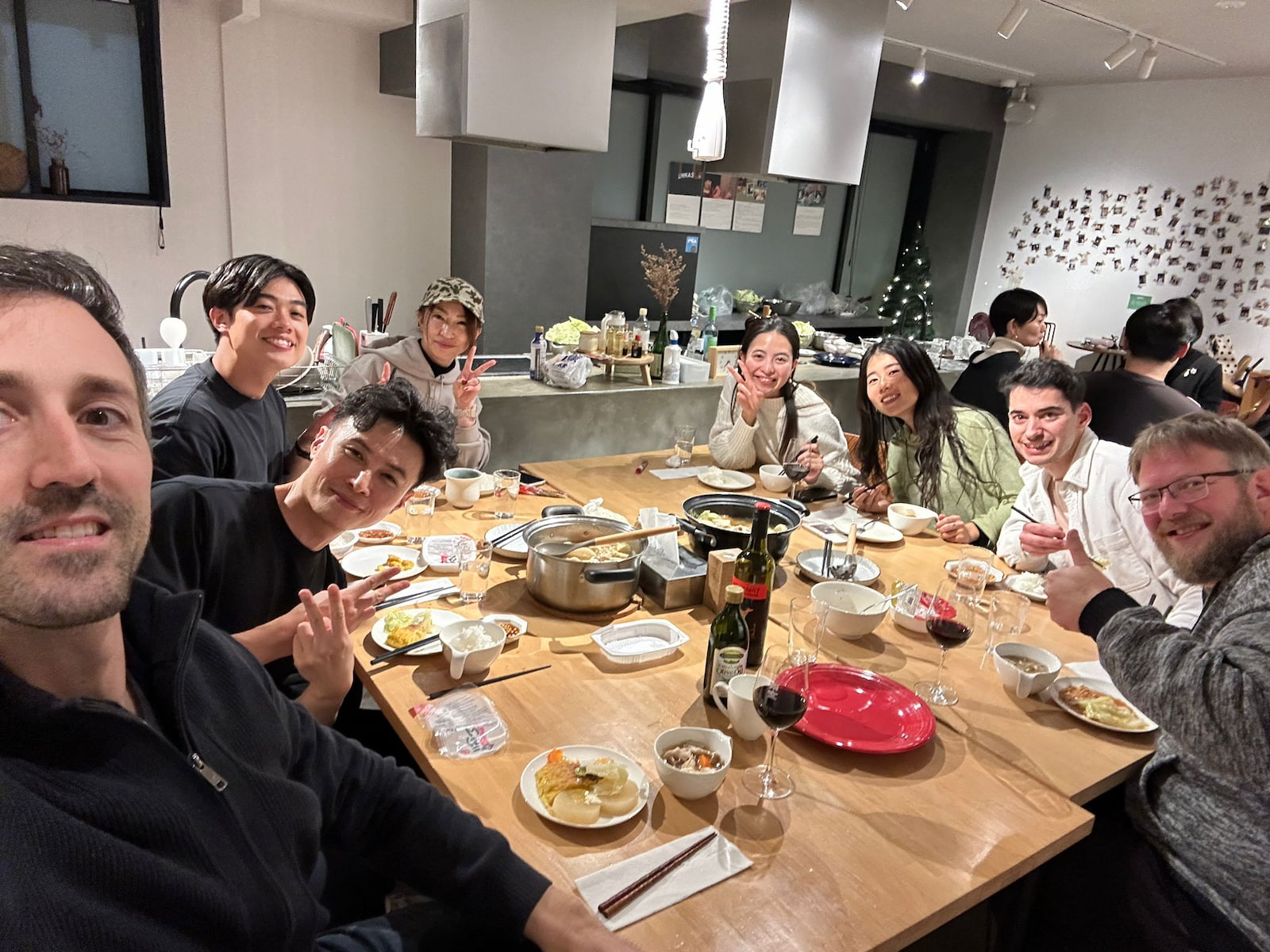
At LINNAS Kanazawa, I'd round people up to go to the supermarket and cook dinner together.
Then we'd all say “itadakimasu” (“let's eat”) and enjoy dinner together.
That warmth made me feel I'd gained a family with no blood ties.
When I got back to the hotel, I wouldn't go to my room first; I'd go to the kitchen, because there was always someone to talk to. This kind of “travel without loneliness” captivated me.
Lesson 3: travel without shopping
Since I started living minimally, my urge to shop has become very low.
In eleven days in Japan, I bought only some small MUJI travel bottles and a little Mario night light.
Actually, I bought the Mario night light on Shopee, back in Taiwan, not in Japan.
I saw it in Shinsaibashi, Osaka, didn't buy it then, and later thought it would make a good Christmas gift exchange present.
So I ordered it on Shopee. It cost about NT$100 more, but I thought it was worth it, because I didn't have to spend time hunting for it.
Lots of things you want can be found online at home; even if they cost a little more, it's worth it, because you don't spend time searching and carrying them around.
I had just one shopping goal for the trip: a Coach bag for my mom.
The bag I'd given her before was about to fall apart, so I wanted to buy her a new one.
Unfortunately I couldn't find a style she liked, so I didn't buy one.
This was my sixth trip to Japan, and the one where I bought the least.
Since I started living minimally,
my desire to shop has dropped dramatically.
I didn't buy souvenirs for anyone, or shop on anyone's behalf.
Traveling without that burden let me focus more on my own experience.
Real digital nomads: how do they do it?
Among the group, I saw three very different digital nomad models:
Case 1: Yuki, a Japanese calligraphy artist
Yuki Nakatani, 28, our calligraphy teacher, speaks fluent English with no Japanese accent — she sounds like she grew up abroad.
She's a minimalist. After college she worked for two years, then quit, took 6,000 yen and went to Europe, where she lived for four months by selling calligraphy on the street.
I asked her, “How did you come up with this way of earning money?”
She said, “The path is made by walking, not by thinking.” And: “Imagine there's a wall in front of you, and break through it.” (She made a fist and punched the air in front of me a few times.)
She'd studied calligraphy for ten years, but only in the last two had she discovered she could make a living from it.
She has no full-time job; the income below is enough to cover her travel and living costs.
She has 50,000 Instagram followers but doesn't make money from Instagram.
No sponsorships, no affiliate marketing. She finds that too tiring; she just wants to do what she loves — calligraphy.
What I learned from Yuki:
do what you love, bring value to others, add English, and you can become a digital nomad.
- How she earns: royalties from a travel book she published, a membership subscription (she mails postcards each month, US$10–50), and calligraphy consultation conversations.
- Her mindset: “The path is made by walking, not by thinking.” She never imagined calligraphy could support her; she got there by repeatedly breaking through the wall inside her.
Case 2: Amanda and Andre, a Taiwanese couple in rental property management
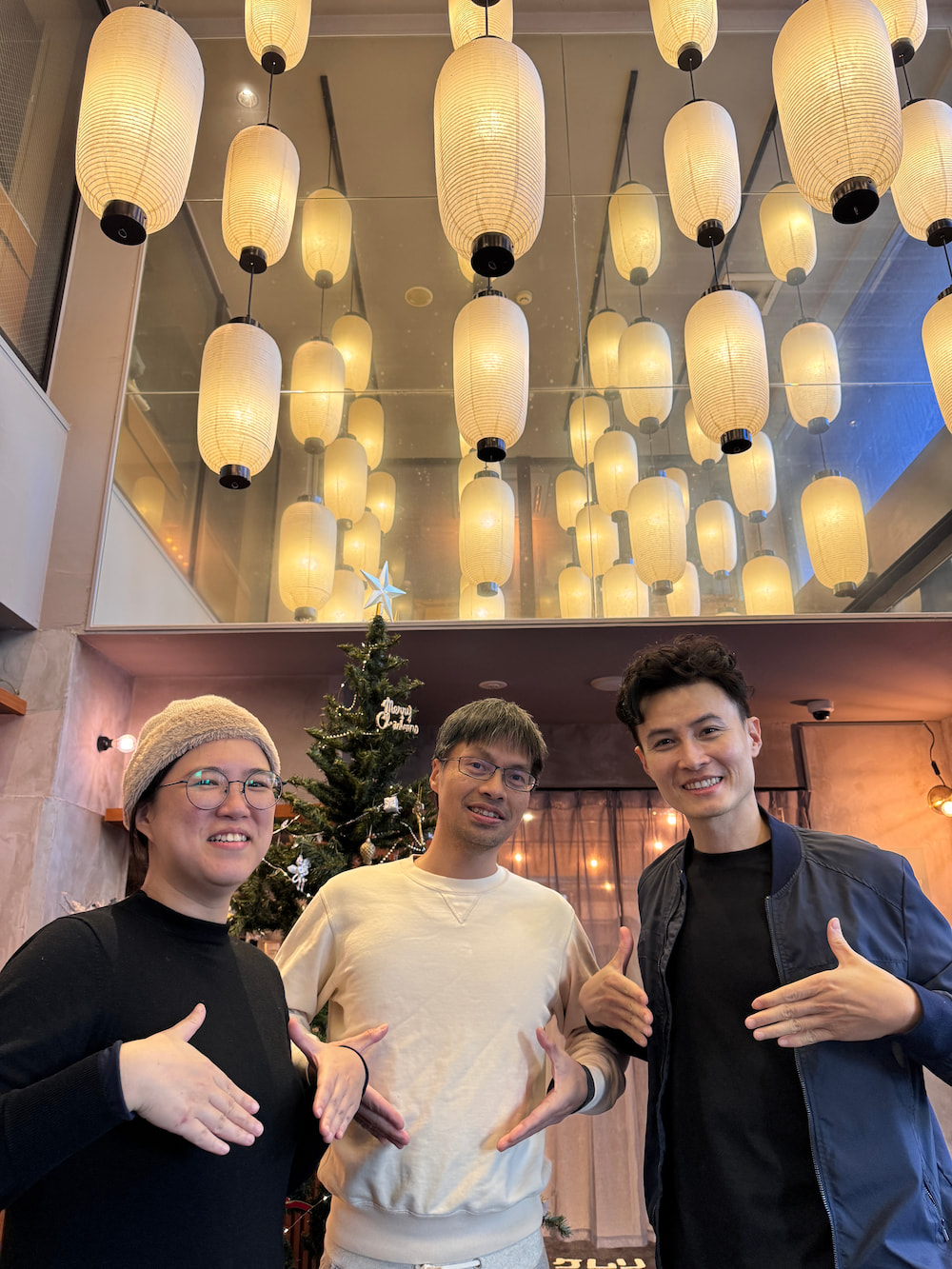
Amanda and Andre were the only other Taiwanese on the program. The couple manages more than a dozen rental properties and stayed in Japan for two months this time.
I was lucky to have them; they often carried me. When I looked puzzled during a conversation, they'd explain what had just been said.
I asked them, “Property management means dealing with tenants' problems — how can you travel for so long?”
They used to do everything themselves, handling every tenant issue, big or small.
Later they outsourced some of the work and found helpers, which made things much easier.
When they're abroad, they direct their helpers remotely — that's how they can stay away for two months.
It reminded me of the book Buy Back Your Time.
If you can hand something to someone else at a lower cost, you're not really spending money — you're buying back your time.
What I saw in them:
if part of your work can be outsourced, and the cost is lower than your hourly wage, you should consider buying your time back.
- How they earn: they outsource repairs, painting and other chores to helpers and manage everything remotely.
- Their mindset: this is the idea behind Buy Back Your Time. When outsourcing costs less than your hourly wage, you should pay to buy your time back.
Case 3: Severin, a Swiss employee
He once had his own company in Switzerland, later closed it and became an employee.
But his boss lets him work remotely.
For him, the hardest part of digital nomading is the time difference: Switzerland is eight hours behind Japan.
Swiss working hours are Japanese evening hours, so he often has to work after dinner.
He's a foodie. He told me that in Japan, a sashimi rice bowl covered in prawns, scallops and sea urchin costs only 5,000–6,000 yen.
In Switzerland it would cost three times as much and not taste as good, so he finds life in Japan very comfortable.
The average salary in Switzerland is about US$6,000 a month; in Japan it's a little over US$2,000.
He earns a Swiss salary and lives in Japan, so life is comfortable — that's “geographic arbitrage.”
Speaking of geo-arbitrage, I have to mention Timothy Ferriss, author of The 4-Hour Workweek.
He described this idea long ago:
you don't have to spend your whole life under pressure in a high-cost place.
Sometimes just changing where you live makes life a whole level easier.
If you earn a Taiwanese salary and live in Thailand, Vietnam or Malaysia, you can live very comfortably too.
Severin helped me understand one thing:
if your work can be done remotely,
use geo-arbitrage and choose a country or city with a lower cost of living,
and you may live like a king.
- How he earns: geographic arbitrage. He works for a Swiss salary (about US$6,500 a month on average) while living in Japan (average salary a little over US$2,000).
- His mindset: a top-grade sashimi bowl in Japan might cost 6,000 yen — not cheap to us, but to him cheaper and better than in Switzerland. Change your location and life gets dramatically easier.
Three abilities every digital nomad needs
If you want to live like this too, I think three things are essential:
1. Speaking English
The whole program was in English — the teachers' sessions, conversations among the group, and group discussions and teamwork.
There were people from Japan, Spain, Bulgaria and Switzerland.
English wasn't a way for anyone to show off; it was a common tool that let us work together.
You notice something very clearly:
people with good English join discussions more easily, and are more easily trusted and connected with.
Honestly, my own spoken English isn't great.
Often I couldn't quite follow what people said; my brain took ages to squeeze out an incomplete sentence. But I still spoke up.
When I couldn't say something, I'd tell them directly: I don't know how to say this, let me try another way.
If they still didn't understand, I'd act it out.
And then ask: what's the natural way to say it?
The process was a bit awkward and not very dignified.
But I found that even when my English wasn't good, as long as I was willing to speak, they were happy to listen.
And if your English is good enough, it can directly become a way to earn.
When you add English to a skill you already have, the people you can serve are no longer limited to Taiwan.
You won't necessarily earn more, but the markets you can choose from become much bigger.
If you're a web designer who speaks English, you can take projects from Europe and the US. The prices and options are completely different.
That's why I say:
language isn't just a skill — it's leverage that amplifies your expertise.
2. Living minimally, and being able to accept uncertainty
I noticed that all these digital nomads lived minimally.
Yuki can live alone in the mountains with almost nothing.
Amanda and Andre cook for themselves.
They're very conscious of living costs, buy cheap ingredients to cook, and wear no designer labels.
This lifestyle keeps spending down and gives them more financial breathing room.
It reminded me of an idea from The Almanack of Naval Ravikant:
“What really limits your freedom
is often not what you lack,
but what you already have and must keep maintaining.”
When your living costs are low, irregular income, moving and changing plans
stop being so frightening.
Elon Musk, the founder of Tesla and SpaceX, did an unusual experiment when he was young.
He deliberately lived on one dollar a day,
eating the cheapest food — pasta, hot dogs — to test how little he needed to survive.
He found that even living very simply, he could cope.
The experiment showed him his “survival baseline.”
Once you know the worst life you could live with, you're far less afraid of taking risks.
Seen this way, minimalism isn't a lifestyle aesthetic; it's an ability to face uncertainty.
They choose to trade certainty for more flexibility and possibility.
3. Letting go of society's default path
During the whole program, no one asked me about my income, or about buying a home, getting married or having children.
Not until the last day did anyone even ask my age.
That surprised me, because in Taiwan, those questions that define “success”
are often less about caring and more of an invisible progress check.
Settle down by thirty, establish your career by forty — life seems to come with a timetable you mustn't fall behind.
But in this digital nomad community, no one cared which square you'd reached.
They had long since stopped scoring themselves by society's standards.
Most digital nomads don't treat career success, owning a home and car, or marriage and children as requirements for success.
They chose something harder: defining success for themselves.
It reminded me of The Pathless Path,
which says:
the hard part isn't that there's no path; it's letting go of the one society has already paved for you.
That's exactly what I saw in these people.
But leaving the default path doesn't make life easier.
On the contrary, you face more doubt, more misunderstanding, and the loneliness of “no one approves of you.”
Giving up society's default path means putting up with sideways looks.
That's why finding a community that understands you matters so much for digital nomads.
Beyond the rose-tinted bubble: loneliness and social fatigue
Digital nomading isn't all wonderful.
The first downside: your friends keep changing.
You're constantly meeting people and saying goodbye, and social fatigue sets in quickly.
The second: intense loneliness.
When I traveled alone to Osaka after Kanazawa, the loneliness hit all at once.
Happiness is only real when shared. When you see something beautiful and there's no one beside you to share it with right then, you feel very lonely.
And connecting through a screen on social media feels hollow.
Closing: take back your choices
This trip to Kanazawa taught me that digital nomading is just one expression of a way of living.
What I really advocate is multiple streams of income. Investments, side businesses, a personal brand or rental income all give you more confidence, more flexibility and fewer constraints.
If you long for freedom too, start practicing now:
- Practice minimalism: lower your cost of living.
- Practice languages: open up a global perspective.
- Practice building multiple incomes: give yourself the ability to “retreat” whenever you need to.
That's the story I wanted to share with you about my trip to Kanazawa at the end of 2025.
I hope we can all design our own FIRE lives.
Listen (in Mandarin)
EP57: Digital nomadism is more than working while traveling
EP58: Three real digital nomads and the three abilities they share
Further reading: Book Notes: The Almanack of Naval Ravikant